
TL;DR — Passive watching loses you 70% of new information within 24 hours. Replace it with a 3-step loop: (1) generate an AI mind map from the video, (2) review the graph for 5 minutes, (3) drill the auto-generated quiz cards. You will retain materially more in materially less time. Try the loop free on mapifast.
The average knowledge worker watches roughly 7 hours of educational content per week on YouTube. The average knowledge worker also remembers almost none of it 48 hours later. That gap is the single biggest productivity leak in modern self-directed learning, and it has nothing to do with intelligence.
It has everything to do with how we engage with the content.
This post is the exact 30-minute weekly workflow that researchers, PhD students, and serious autodidacts use in 2026 to extract durable knowledge from YouTube. The supporting tools have changed; the underlying cognitive science has not.
The science: why passive watching fails
Three findings from cognitive psychology drive everything below.
- The forgetting curve (Ebbinghaus, 1885; replicated continuously since): without active engagement, retention drops to ~30% within 24 hours.
- The testing effect (Roediger & Karpicke, 2006): retrieval practice produces 2–3× better long-term retention than re-studying.
- Spacing (Cepeda et al., 2008): the same total study time, spread over multiple sessions, produces dramatically better retention than massed practice.
In plain English: re-watching a video is almost useless. Forcing yourself to remember the content, then doing it again tomorrow, then again next week — that is what actually moves information from working memory to long-term memory.
The hard part has always been turning a 60-minute linear video into something you can actually retrieve from. Mind maps solve exactly that.
The 3-step loop
Step 1 — Map the video (90 seconds)
Open mapifast. Paste the URL of any lecture, podcast, or talk. Click Generate.
Roughly 30 seconds later you have an interactive mind map: the conceptual pillars of the video as a navigable graph, with each node already researched and citation-grounded against arXiv and the open web.
This is not a summary. It is the video's structure, externalised. Your brain stores knowledge as a graph anyway; you are just skipping the painful step of building the graph manually.
Step 2 — Active review (5 minutes)
Open the map. For each major node:
- Read the AI-researched summary.
- Click "Go deeper" on anything that's still fuzzy.
- Add a one-line personal note in your own words. This is the single most important habit. Restating in your own words is the cheapest active-engagement signal you can give your brain.
Five minutes total. You are not trying to memorise anything yet.
Step 3 — Quiz (5 minutes, then space it out)
Open the Quiz tab. mapifast generates spaced-repetition cards directly from the source video. Run through them. Get some wrong. That's the point — every retrieval failure is the moment your brain re-encodes the information more durably.
Then come back tomorrow. Then in 3 days. Then in a week. The app handles the scheduling.
This is the difference between "I watched a great Karpathy lecture last month" and "I can actually explain byte-pair encoding from first principles."
Why this beats your current workflow
If you're currently doing one of these:
- Re-watching — Wasteful. Recognition feels like learning but isn't.
- Taking linear notes — Better, but you're still encoding in the wrong shape. Your brain stores knowledge as a graph; linear notes force a costly translation step on retrieval.
- Pasting transcripts into ChatGPT — Better than nothing, but you get a single summarisation pass, no graph structure, no quizzes, no spacing, and no citations.
The mind-map-plus-quiz loop dominates all three because it matches the underlying cognitive primitives directly.
What to map (and what not to)
In our usage data across thousands of mapifast users, these video categories produce the highest "retention lift":
- University-level lectures (MIT OCW, Stanford, 3Blue1Brown, Karpathy's "Let's build" series)
- Long-form expert interviews (Lex Fridman, Dwarkesh Patel, Acquired, Tim Ferriss)
- Conference talks (NeurIPS, ICML, ACL, ICLR keynotes)
- Technical tutorials longer than 30 minutes
- Audiobook-style podcasts with a clear thesis
Categories where the loop is overkill:
- News, vlogs, entertainment
- Anything under 10 minutes (just take a 30-second note)
- Music, ASMR, tutorials you'll only follow along once
The weekly cadence
Treat this as a recurring 30-minute block on your calendar. Once you have the loop running, you'll find yourself watching less, retaining more, and finally remembering why you bookmarked half the videos in your "watch later" graveyard.
Run your first loop free → (10 maps per month, no card required).
Read more
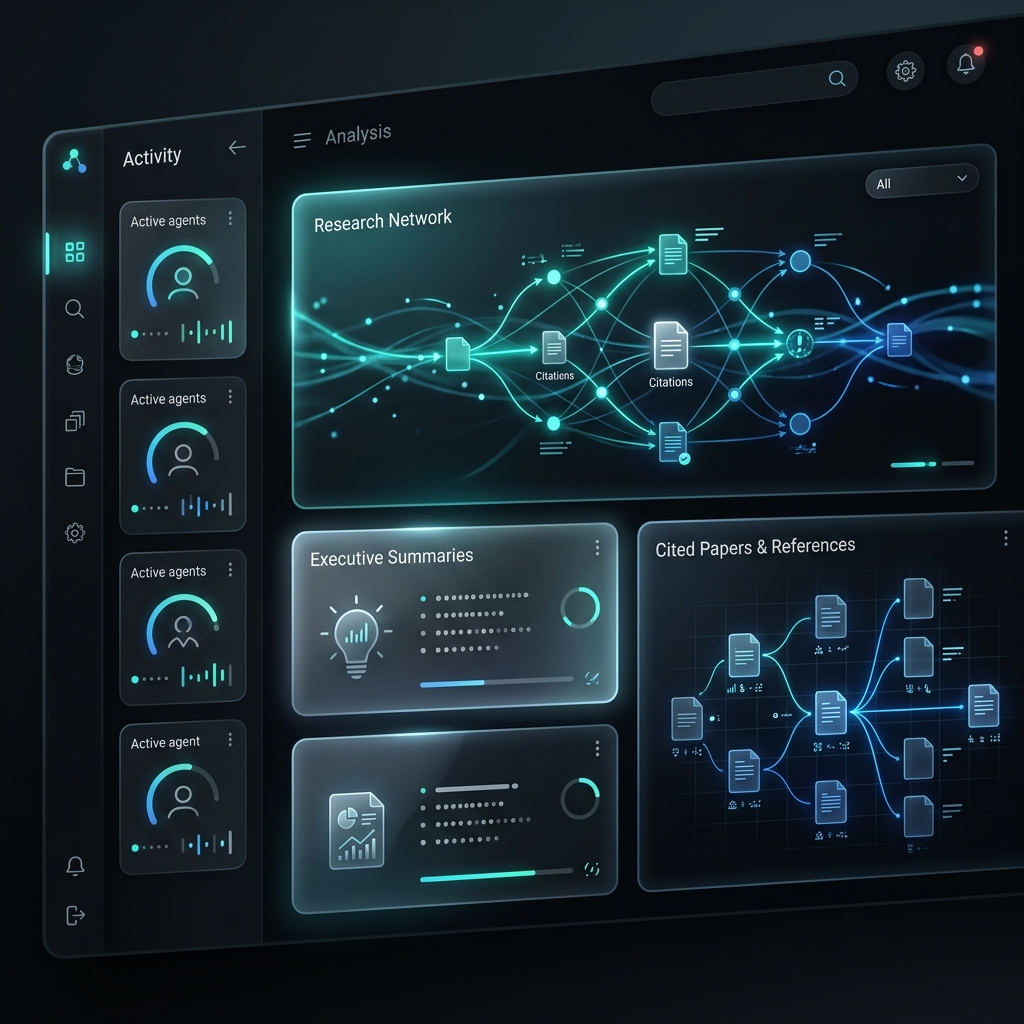
How to Turn Any YouTube Video into an AI Mind Map (2026 Guide)
A 5-minute guide to converting any YouTube lecture, podcast, or tutorial into an interactive AI mind map with citations, quizzes, and Notion export.

YouTube to Mindmap: How AI is Revolutionizing Research in 2026
Discover how AI-powered tools like mapifast are transforming long-form YouTube lectures into interactive, fact-checked mindmaps for researchers and students.
The 7 Best AI Mind Mapping Tools in 2026 (Tested & Compared)
An honest, hands-on comparison of the top AI mind-mapping tools in 2026 — Mapify, Heptabase, Whimsical AI, MindMeister, Notion AI, Coggle, and mapifast.